

How Inflation and Economic Growth Shape Each Other
Learn how inflation and economic growth interact, when rising prices signal strong demand or supply pressure, and what Indian households and businesses should w

Inflation and economic growth are connected, but neither causes the other in a fixed way. Stronger growth can lift prices when demand outpaces the economy’s ability to supply goods and services; inflation can also rise when costs jump even as growth weakens. The relationship depends on what is driving prices, how much spare capacity businesses have, and how households and policymakers respond.
For Indian readers, it helps to separate broad price changes from the price of a single item, and real growth from growth measured in rupees. Looking at these distinctions alongside jobs, household spending, production and borrowing costs gives a clearer picture than treating one inflation reading or growth figure as a verdict on the economy.
Use this checklist to read the signals in order: identify what each measure captures, check whether demand or supply is moving prices, and consider how imported costs pass through to local businesses. Then weigh the likely effects on consumers, company decisions and investment rather than assuming that rising prices always mean a stronger economy.
- Inflation tracks changes in prices; real growth tracks changes in output after adjusting for prices.
- Demand can raise both output and prices when spare capacity runs short, while supply shocks can lift prices and restrain production.
- Imported costs pass through to Indian prices unevenly, depending on exchange rates, contracts, inventories and competition.
- Read inflation alongside growth, capacity, incomes and input costs to understand what is driving the change.
What inflation and economic growth measure
Read the price measure
Inflation measures how the prices of a broad basket of goods and services change over time, not whether every item gets dearer. In India, consumer price inflation tracks household-facing costs such as food, housing and transport, while wholesale price measures follow prices earlier in the supply chain. A single grocery bill cannot show the overall trend.
For a household, the practical question is whether typical expenses are rising faster than income; for a company, it is whether inputs and wages are outpacing selling prices. Businesses tracking imported input costs may use bugünkü döviz kurları as one reference when assessing how overseas prices could affect domestic costs. The exchange rate is only one part of that cost calculation.
A common mistake is to treat a lower inflation rate as proof that prices have fallen. If inflation slows, prices are generally still rising, just more slowly; an actual fall in the overall price level is deflation. Compare the inflation rate with the same measure in earlier periods and with changes in incomes before judging its effect.
Separate growth from prices
Economic growth usually refers to an increase in the quantity of goods and services an economy produces, measured through real gross domestic product. Real GDP adjusts for price changes, so it is more useful than nominal GDP for judging whether output itself expanded. A larger rupee value of production can reflect higher prices, more output, or both.
Check the period and comparison used in a growth figure before interpreting it. Year-on-year growth compares an interval with the same interval a year earlier, while quarter-on-quarter growth looks at a shorter change and may be more affected by seasonal patterns. These measures answer different questions, so they should not be treated as interchangeable.
Output growth can be strong while some households feel squeezed if wages lag behind essential costs or gains are unevenly distributed. Conversely, a household may experience a welcome increase in income even when national output growth is modest. For a rounded reading, compare real growth with inflation, employment conditions and income trends rather than relying on GDP alone.
Why prices and output can rise together

Demand meets capacity
Prices and output can rise together when households and firms spend more and businesses can initially respond by producing more. A factory with unused shifts can increase production to meet new orders; as spare capacity narrows, it may need to pay more for workers or materials, and some of those higher costs can reach customers as higher prices.
- Strong demand can lift both production and prices when businesses have limited spare capacity.
- Unused capacity and available inventory can let firms meet orders with less price pressure.
- Productivity gains can help output grow without an equal increase in production costs.
This pattern is more likely when demand rises across many industries rather than for one product alone. Higher incomes, easier credit or stronger public spending can support purchases, while firms expand output, hire staff and invest in equipment. If production cannot keep pace, longer delivery times and increasingly full order books may accompany price pressure.
The relationship is not automatic: companies may have room to increase output without raising prices, especially when productivity improves or inventories are available. Watch whether price rises are broadening as activity strengthens, or whether production is growing without similar pressure. The mix matters because it helps distinguish an economy using spare capacity from one running into constraints.
Growth without lasting inflation
An economy can grow without persistent inflation when its ability to produce keeps pace with demand. Better logistics, investment in equipment, worker skills and reliable access to inputs can help businesses deliver more goods and services without bidding up costs as quickly. That makes the source and durability of growth important, not just its headline pace.
For example, a firm that reduces delays and gets more output from its existing staff may fill additional orders without immediately lifting prices. If many businesses make similar improvements, the economy can expand while supply responds more effectively. These gains take time, however, and a short burst of output should not be confused with lasting productivity improvement.
Consumers and investors should look for signs that capacity is expanding, such as sustained business investment or improved supply availability, alongside growth figures. Strong demand can still raise prices if capacity additions arrive late or do not match what people want to buy. A calm inflation reading today does not rule out pressure if demand continues to outstrip future supply.
How demand and supply shape inflation
Spot demand-led pressure
Demand-led inflation occurs when buyers want more than producers can readily supply at current prices. Households may spend more as incomes rise, while firms may place orders for equipment and materials; if suppliers cannot respond quickly, sellers gain room to raise prices. A household comparing an overseas purchase with its budget can use a döviz kurları çevirici to understand the currency conversion involved.
- Mistake: treating one product’s price rise as economy-wide inflation; better approach: check whether increases appear across categories.
- Mistake: assuming more spending always means sustained inflation; better approach: assess whether production and supply can respond.
- Mistake: reading sales alone as proof of excess demand; better approach: consider capacity, inventories and hiring too.
Look for evidence across several parts of the economy rather than assuming that one popular product signals broad demand pressure. Rising sales, active hiring and capacity constraints can point in the same direction, while a temporary rush for one item may have a narrower effect. The strength and spread of demand help explain whether price increases are likely to persist.
The better question is whether supply can catch up. If businesses add shifts, replenish stock or expand facilities, stronger spending may produce more output with less continuing price pressure. If orders remain above available capacity, price rises can spread from a few sectors to others as workers, transport and materials become harder to secure.
| Signal | Likely driver | What to check |
|---|---|---|
| Broad sales gains | Stronger demand | Orders and capacity |
| Longer delivery times | Supply constraint | Inventories and lead times |
| Higher input bills | Cost pressure | Supplier costs and margins |
| Prices rise as output expands | Demand meeting capacity | Production and hiring |
Recognise supply shocks
Supply-driven inflation begins when goods or services become harder or costlier to provide, even if buyers are not spending more. A poor harvest can reduce food availability, while transport disruption can delay deliveries and raise distribution costs. These shocks can push prices up while limiting production, creating a different pattern from demand-led inflation.
The effect may be sharp in the affected category and then spread if that item is a key input for other businesses. Higher food costs can strain household budgets, while costlier materials or freight can narrow manufacturers’ margins or lead them to adjust prices. Whether the shock lasts depends partly on how quickly supply recovers and alternatives become available.
When supply is disrupted, raising interest rates cannot produce a missing crop or clear a blocked route. Monetary policy can influence overall demand and expectations, which may help prevent a temporary price shock from becoming persistent, but it cannot directly restore supply. Watch whether the original disruption eases and whether price increases are spreading to unrelated goods and services.
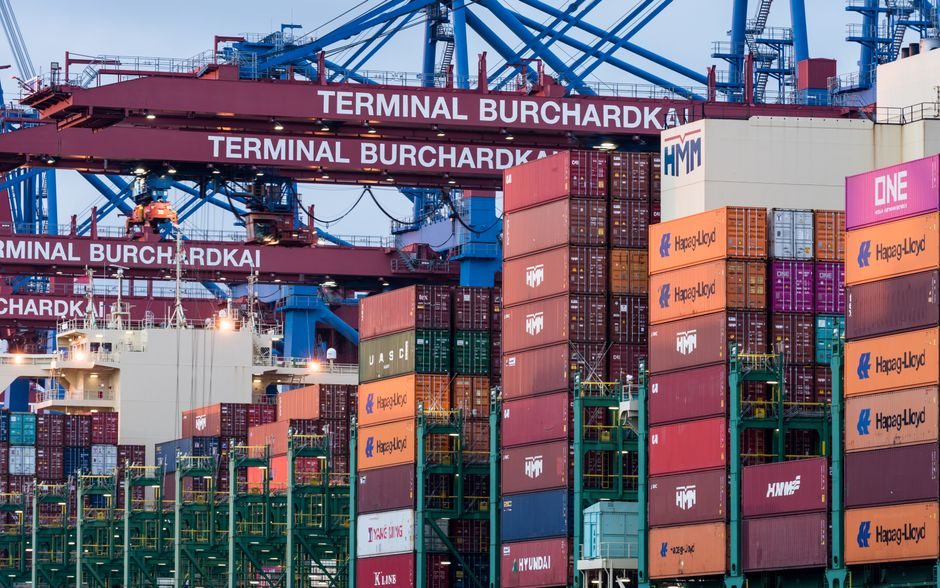
A weaker rupee can raise the rupee cost of imported goods and inputs, even when their foreign-currency price is unchanged.
How imported costs feed into domestic prices
Trace the exchange-rate channel
A weaker rupee can raise the rupee cost of imported goods and inputs, even when their foreign-currency price is unchanged. The effect can reach Indian businesses that buy fuel, components or machinery from abroad, then pass through to customers if firms raise selling prices. The final impact depends on contract terms, existing inventories and the supplier’s pricing choices.
Exchange-rate movements do not translate into domestic inflation in a single, uniform step. A company may absorb a cost increase to protect sales, use an existing stock of inputs bought at earlier prices, or renegotiate with suppliers. Other firms may adjust prices sooner, particularly when imported items make up a substantial part of their costs and margins are already tight.
For consumers, the link is clearest when a product or its components depend heavily on imports, but price changes can take time to appear. Businesses can compare exchange-rate movements with supplier invoices and input costs rather than assuming the currency alone explains a price change. That comparison also helps separate currency effects from changes in global commodity prices or domestic distribution costs.
Check pass-through and timing
Imported cost increases reach local prices unevenly because firms adjust at different points in their supply chains. A retailer may have stock bought at an earlier cost, while a manufacturer may face a new input bill as soon as a contract resets. The delay between a currency move and a customer’s bill can therefore vary by product and business.
Competition also shapes pass-through: a firm facing close substitutes may absorb part of a cost increase rather than lose customers, while one with few alternatives may have more room to raise prices. Government taxes, transport costs and local supply conditions can add to or offset the imported component. A price change rarely has one cause that explains the whole movement.
To interpret a rise in domestic prices, track the sequence: currency and global input costs first, then company costs, and finally retail prices. Compare products with different exposure to imports, and allow for delays in contracts and inventory turnover. For investors, this distinction matters because higher input costs can affect company margins before they appear in consumer inflation.
What inflation means for households and businesses
Household budgets under pressure
When prices rise faster than income, households must spend more to maintain the same basket of goods and services. A family may respond by switching brands, delaying a purchase or cutting discretionary spending. These choices can reduce demand for businesses, while higher costs for essentials leave less room in the budget for savings or debt repayments.
- ☐ Track changes in recurring household bills.
- ☐ Check whether income has kept pace with essential costs.
- ☐ Review borrowing costs before taking on new debt.
- ☐ Revisit savings plans if regular expenses have risen.
Inflation does not affect every household equally because spending patterns differ. A household that devotes a large share of its budget to food, fuel or rent may feel price increases more sharply than one with greater flexibility. Comparing the overall inflation rate with personal expenses helps explain why official figures can feel different from a family’s experience.
Use a simple budget check to see where price changes are having the greatest effect. Compare current spending with earlier bills for essentials, then separate necessary costs from purchases that can be postponed. This gives households a practical basis for adjusting spending without assuming that every price rise will continue at the same pace.
- Review recent spending on essentials.
- Compare grocery and transport costs over time.
- Identify flexible purchases to defer.
- Keep loan payments and savings in view.
Costs and pricing decisions
For a business, inflation can raise the cost of inputs such as materials, transport, rent and wages. If the company cannot pass those increases on to customers, its profit margin may shrink. If it raises prices, customers may buy less, especially when competing products or lower-cost alternatives are available.
The effect depends on how quickly costs and selling prices adjust. A firm with long-term supply agreements may face a different cost path from one that buys inputs at changing market rates. Businesses also need to consider whether customers are willing to accept a price change or whether a smaller pack, revised service or improved efficiency is a better response.
Managers can separate temporary cost movements from changes that appear more persistent by reviewing supplier terms, sales volumes and unit costs together. That check helps avoid treating a brief rise in one input as a reason for a broad price increase. It also shows whether the company is absorbing costs, passing them through or losing sales.
When inflation can support or weaken growth

Moderate price growth
A gradual rise in prices can accompany expanding production when demand is firm and businesses are using more of their available capacity. In that setting, companies may invest, hire and increase output to meet customer orders. The price increase alone does not prove that growth is healthy; the source of demand and the response of production matter.
For businesses exposed to dollar-priced goods, bugün dolar kaç TL can offer a practical currency reference when considering potential cost pressures. Exchange-rate movements may change the rupee cost of imported inputs, but the final effect also depends on contracts, hedging, shipping costs and how much of the change a firm passes on to customers.
Look for evidence that output is responding alongside prices, such as stronger sales volumes or expanding production, rather than relying only on higher nominal revenue. A company can report more rupee sales simply because it charged higher prices. Volume, capacity use and investment plans help distinguish growth in real activity from a higher value attached to the same output.
Inflation that strains expansion
Inflation can weaken growth when rapidly rising costs squeeze household purchasing power and business margins at the same time. Consumers may postpone non-essential spending, while companies delay investment because future costs and demand are harder to predict. The result can be slower sales, reduced production and fewer opportunities to expand.
The response of monetary policy also matters. If persistent inflation leads to tighter financial conditions, borrowing can become less attractive for households and firms, which may slow purchases and investment. The effect is not automatic or identical across sectors: businesses with strong cash flows may continue investing, while rate-sensitive activity can cool sooner.
Assess whether price pressures are broad and persistent or concentrated in a few items. A temporary supply disruption can raise prices without signalling strong underlying demand, while sustained increases across many categories may call for closer attention to expectations and policy. For an Indian reader, the key is to consider price trends alongside real output and borrowing conditions.
Risks of reading inflation and growth figures
Nominal and real growth
A rise in nominal output can reflect higher prices rather than a larger quantity of goods and services produced. Real growth adjusts for price changes, making it more useful for judging whether economic activity has expanded. When comparing company results or national output, check which measure is being reported before interpreting an increase as stronger production.
The distinction is also important when comparing income with expenses. A business may report higher revenue while selling the same volume at higher prices, and a worker’s pay may rise without improving purchasing power if living costs rise faster. Nominal figures still matter for cash flows and budgets, but they do not by themselves show how much activity or buying power has changed.
Read the measure, period and basis together. Check whether a figure is nominal or adjusted for inflation, whether it compares with the previous quarter or year, and whether it is seasonally adjusted where relevant. These details can change the meaning of a headline and prevent a short-term movement from being mistaken for a lasting shift.
Timing and composition
Inflation and growth indicators do not always describe the same moment. Some measures are released after the period they cover, and revisions can alter earlier readings. Comparing a current inflation figure with an older growth estimate without checking their reference periods may create a misleading impression of cause and effect.
A national average can also hide sharp differences among sectors and households. Food-price pressure may weigh heavily on consumers even when some service prices are stable, while a booming industry can coexist with weaker activity elsewhere. The headline rate is a useful starting point, but the composition of prices and output explains who is affected and where momentum sits.
Avoid drawing a firm conclusion from one monthly reading or a single company result. Check whether the movement persists across releases and whether related indicators point in the same direction. Employment, sales volumes, input costs and investment plans can add context, though no single indicator should be treated as a complete account of economic conditions.
- Check the period each figure covers.
- Look for revisions and seasonal effects.
- Compare headline changes with sector detail.
How to interpret the relationship in context

Build a balanced reading
Start by identifying what has changed: prices, output, or both. Then check whether growth is measured in real or nominal terms and whether inflation is broad, easing or concentrated in particular categories. This basic sequence keeps a price increase from being mistaken automatically for either a sign of strength or a warning of contraction.
- Identify the price and output measures being compared.
- Check whether output is real or nominal.
- Consider demand, supply and financing conditions.
- Relate the evidence to the household or business decision.
Next, consider the mechanism connecting the figures. Strong demand can lift prices while encouraging production, whereas higher input costs can raise prices and constrain output. For Indian businesses and investors, currency exposure, financing needs and customer demand can help explain why the same inflation reading affects one company differently from another.
Finally, compare the data with the decision at hand. A household deciding whether to adjust its budget needs to focus on recurring expenses and income, while an investor assessing a company should examine margins, sales volumes and debt costs. Context does not remove uncertainty, but it helps show which risks are relevant and what evidence to follow next.
Watch trends, not headlines
Use a sequence of readings to judge direction rather than treating one release as a settled trend. Ask whether inflation is broadening or easing and whether real activity is sustaining its pace. If the signals conflict, note the uncertainty instead of forcing them into a simple story about growth or weakness.
For businesses, useful checks include input prices, customer volumes, wage costs and the terms on which borrowing is available. Investors can compare those pressures with revenue quality, operating margins and investment plans. Households can track essential expenses against income. These measures connect broad economic figures to the decisions people and companies actually face.
A practical next step is to write down the indicator, what it measures and what would change your interpretation. For example, a price rise paired with stronger output suggests a different setting from one paired with falling volumes. Recheck the evidence when new data arrive, and avoid changing a long-term plan solely because of one headline.
Frequently asked questions
Can inflation fall while economic growth remains strong?Yes. Inflation can ease if supply improves, input costs settle or earlier price pressures fade, while production and demand continue to expand. The direction of prices and the pace of output are related but distinct. Check real growth alongside the breadth and persistence of price changes before concluding that lower inflation means the economy is weakening.
Why can households feel more inflation than the headline rate suggests?The headline rate represents an average across a basket of goods and services, but individual budgets differ. A household spending more on food, fuel or housing may face faster increases in its own regular costs. Comparing personal expenses over time with income changes gives a more useful view of purchasing power than relying on the headline figure alone.
How does inflation affect business investment?Uncertain or rising costs can make it harder for a business to estimate future returns, while higher borrowing costs may make projects less attractive. At the same time, firms facing strong demand may invest to expand capacity. The effect depends on expected sales, input costs, financing and the company’s ability to pass price changes on to customers.
Which figures should investors compare when judging growth?Investors can compare real output or sales volumes with nominal revenue, then assess margins, input costs and financing conditions. For a company, higher revenue is more informative when considered alongside the quantity sold and the cost of producing it. For the wider economy, check the period and basis of each measure and look for confirmation across more than one release.
Read the signals before acting
Inflation and growth can move together when demand expands and businesses increase production, but rising costs can also lift prices while limiting output. The distinction depends on what is driving the change, how persistent it is and whether activity is measured in real terms. Households, companies and investors should connect the headline figures to their own costs, sales, income and financing rather than treating one reading as a complete verdict.
For your next review, compare a current inflation measure with real growth over matching periods, then check whether the movement appears broad or concentrated. Add one relevant indicator—such as household essential costs, business sales volumes or borrowing conditions—to explain the likely effect. This simple check makes it easier to separate price changes from genuine expansion and to update decisions when new evidence arrives.
Add India Business News as a preferred source on Google


